
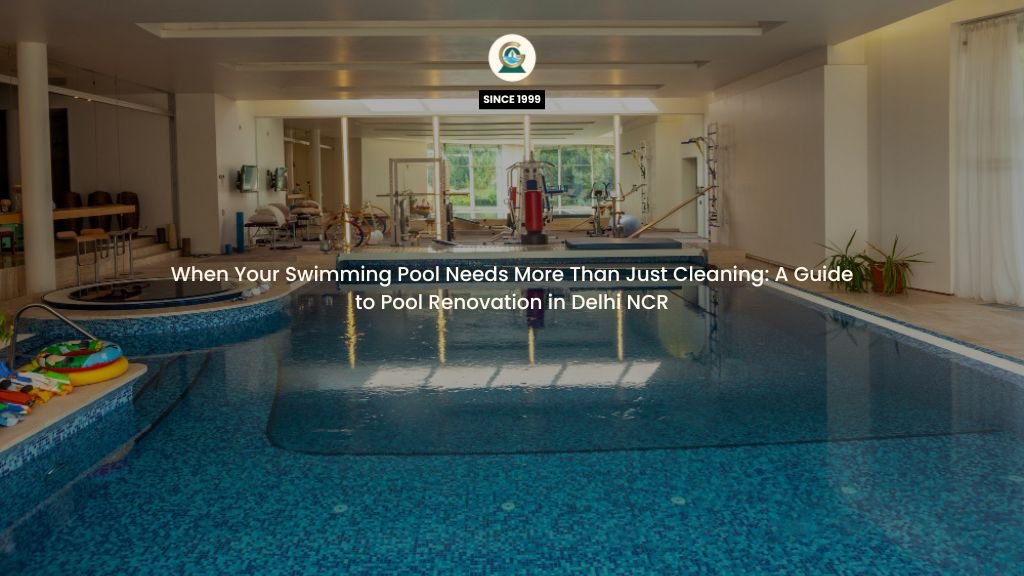
I was at a farmhouse in Chattarpur last month, standing beside what used to be a beautiful natural swimming pool. The owner had that frustrated look I’ve seen too many times. “We built this eight years ago,” he said. “Now it’s just… sad.”
He wasn’t wrong. The natural stone coping had started cracking. The filtration system was making sounds it shouldn’t. And the waterline tiles? Let’s just say they’d seen better days.
This conversation happens more often than you’d think. Especially in Delhi NCR, where our brutal summers and occasional winter chills put swimming pools through a workout that would humble any gym membership.
Why Swimming Pools in Delhi NCR Age Faster Than You’d Expect
Let me be honest about something most contractors won’t tell you upfront: a swimming pool in our climate isn’t a “build it and forget it” proposition.
The temperature swings we get here – 45 degrees in June, dropping to 4 degrees in January – that’s tough on any structure. Add our water quality issues, the dust from construction happening in every other plot, and the occasional water shortage forcing pools to sit empty… your pool is basically doing CrossFit year-round.
I remember working on a renovation project near The Grand in Vasant Kunj. The pool was only six years old, but the concrete had developed hairline cracks that were now proper fissures. Why? The original contractor had skipped proper curing during construction. In May. In Delhi.
That’s the kind of shortcut that comes back to haunt you.
Signs Your Pool Needs Renovation, Not Just Repair
There’s a difference between fixing a broken pump and actually renovating your pool. Here’s what I tell clients when they’re trying to figure out which situation they’re in:
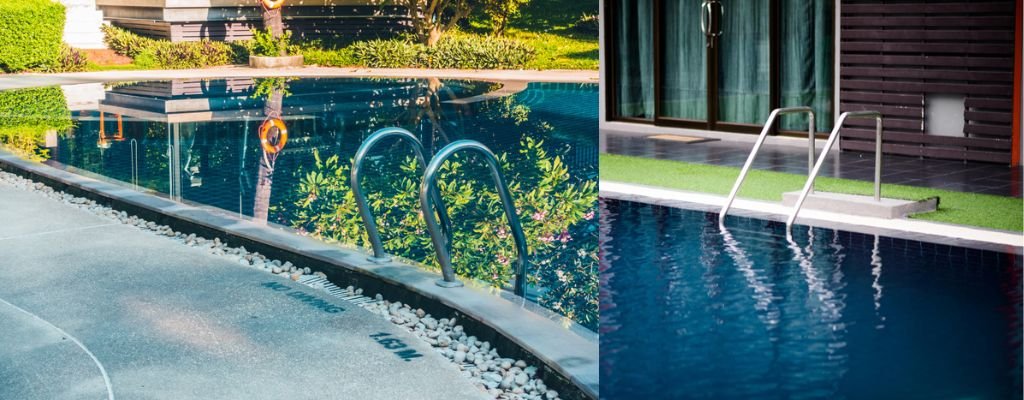
Surface-level damage you can see: If your pool’s plaster is stained beyond what cleaning can fix, or if you’re seeing areas where the underlying concrete is showing through, that’s renovation territory. Same goes for tiles that have become loose or cracked in multiple areas.
Structural issues: Cracks that keep coming back even after repairs? Water level dropping faster than evaporation can explain? These point to bigger problems. I’ve seen pools in Gurgaon’s older sectors where the ground settlement over years created structural stress the original design didn’t account for.
Outdated systems: If your pool’s filtration system is from before 2010, you’re probably spending more on electricity and chemicals than you need to. Modern systems are not just more efficient – they’re quieter, smarter, and easier to maintain.
Changed needs: Maybe when you built the pool, you had young kids who needed shallow areas. Now they’re teenagers who want depth for diving. Or perhaps you’ve realized you’d rather have a natural swimming pool than the chemical-heavy setup you currently have. These aren’t problems to fix – they’re opportunities to reimagine.
The Renovation Process: What Actually Happens
I’m going to walk you through what a proper pool renovation looks like, because I’ve seen too many botched jobs where contractors took shortcuts.
Assessment first, everything else second: We start by draining your pool and doing a thorough structural inspection. This means looking at the shell integrity, checking for hidden leaks, examining the plumbing and electrical systems. For a pool in Defence Colony we renovated last year, this assessment revealed that while the surface looked tired, the structure underneath was solid. Saved the client a fortune.
Structural repairs before aesthetics: If there are cracks or weak spots in the concrete shell, those get addressed first. We use polymer-modified cement for repairs that need to flex with temperature changes. This isn’t the time for regular cement and hope.
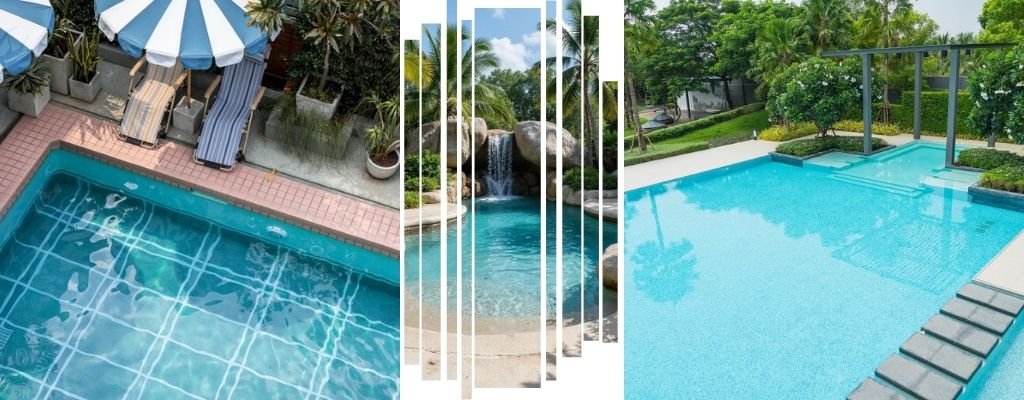
Replastering or retiling: This is where your pool gets its new skin. For natural swimming pools, we often use exposed aggregate finishes that feel amazing underfoot and look like they belong in a mountain stream rather than someone’s backyard. For more traditional pools, quality tiles with proper waterproofing behind them.
System upgrades: New filtration, updated plumbing if needed, LED lighting that actually looks good instead of that harsh white light. If you’re moving to a natural pool system, this is where we install the regeneration zone and biological filtration.
Finishing touches: Coping stones, deck refinishing, landscaping integration. The stuff that makes your pool look like it was always meant to be exactly where it is.
Natural Pool Conversion: The Renovation That Changes Everything
Here’s something interesting: about thirty percent of our renovation projects in the last three years have been conversions from traditional chlorine pools to natural swimming pools.
I get why. Once you’ve experienced swimming in water that doesn’t sting your eyes or leave your skin feeling like you’ve been marinated in chemicals, going back feels wrong.
The conversion process is more involved than a standard renovation, but it’s doable even with existing pool structures. We essentially create a biological filtration system alongside your existing pool – think of it as giving your pool its own mini-ecosystem that keeps the water clean naturally.
There’s a pool in Sainik Farms we converted two years back. The owners were tired of the chemical smell and the constant pH balancing. Now? The water’s clean year-round, local birds have made the regeneration zone their regular hangout, and their water bill actually went down because the system requires fewer water changes.
What Renovation Costs Actually Include (And What They Shouldn’t)
I’m not going to give you prices here – every project is different. But I can tell you what you’re paying for when you renovate properly:
You’re paying for materials that will last another decade or more in Delhi’s climate. You’re paying for skilled labor – the kind where people know how to apply waterproofing correctly, not just quickly. You’re paying for proper curing time, which means your pool won’t be ready in a week, but it also won’t develop problems in a year.
What you shouldn’t be paying for: fixing the same problems twice because someone rushed the job. Or “premium materials” that turn out to be standard stuff with a markup. Or unnecessary features that sound fancy but don’t actually improve your pool experience.
Renovation vs. Rebuilding: Making the Call
Sometimes a pool is genuinely beyond renovation. I had to tell this to a client in Mehrauli whose pool had been built without proper structural engineering – the entire shell was compromised.
But that’s rare. Most pools in Delhi NCR that are 10-15 years old can be renovated to look and function better than they did when new. The structure is usually sound; it’s the systems and surfaces that need attention.
The decision point: if the structural repairs would cost more than 60-70% of what a new pool would cost, and you’re also wanting to change the pool’s size or shape significantly, rebuilding might make more sense. Otherwise, renovation is typically the smarter investment.
Maintaining Your Renovated Pool
Once your pool is renovated, you’ve basically hit the reset button. This is your chance to maintain it properly from day one.
For traditional pools, that means regular chemical testing, proper water circulation, and catching small issues before they become big ones. For natural pools, it means understanding that the biological system needs a few months to fully establish, being patient with it, and not panicking if the water isn’t crystal clear on day three.
Either way, a renovated pool that’s maintained well should give you another 10-15 years before needing major work again.
Working With Architects on Pool Renovations
If you’re an architect with a client whose property includes an aging pool, here’s something to consider: pool renovation can be the anchor point for a larger outdoor redesign.
We’ve worked on projects where renovating the pool became the catalyst for reimagining the entire garden area. New decking materials, updated landscaping that integrates with the pool design, outdoor lighting that makes evening entertaining possible. The pool stops being an isolated feature and becomes part of a cohesive outdoor living space.
The Delhi NCR Context
Every region has its challenges. In coastal areas, it’s salt air. In mountainous regions, it’s freeze-thaw cycles. Here in Delhi NCR, it’s the temperature extremes, the water quality variations, and increasingly, the preference for water-efficient solutions.
A good renovation takes all this into account. Materials chosen for their ability to handle thermal stress. Systems designed to work with the water quality we actually have, not the ideal water that exists only in textbooks. Designs that acknowledge our clients want beautiful pools that don’t require a full-time maintenance staff.
When to Start Thinking About Renovation
Don’t wait until your pool is actively falling apart. If you’re starting to feel like your pool is more trouble than it’s worth, or if you find yourself avoiding pool maintenance because it’s become tedious, or if you look at your pool and feel nothing – no excitement, no pride, just mild disappointment – that’s when to start conversations about renovation.
The best time to actually do the work? October through February. You’re not using the pool anyway, the weather is perfect for construction work, and you’ll be ready to swim when March rolls around.
If you’re dealing with a pool that’s lost its appeal or you’re an architect working on a property with a tired swimming pool, let’s talk. Twenty-five years of working with pools in Delhi NCR means we’ve probably seen and solved whatever challenge you’re facing.