
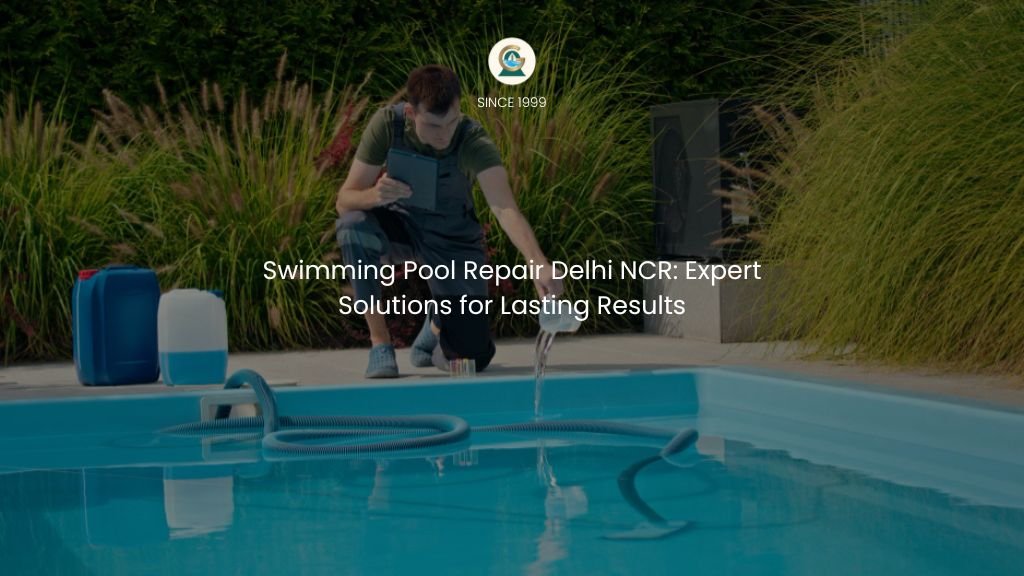
Expert Swimming Pool Repair Delhi NCR: Transform Damaged Pools
Got a call last Tuesday. Client experiencing swimming pool repair Delhi NCR issues—water leaking fast, creating wet patches across his lawn. By the time I reached his Hauz Khas property, the damage had spread three meters from the pool edge.
Underground leak in the return line. The kind that starts small and becomes catastrophically expensive.
We diagnosed it by noon and completed repairs within three days. Could have been much worse.

Understanding the Repair vs. Renovation Distinction
Let me clarify something important because these terms get confused constantly.
Repair addresses specific problems. A cracked tile. A leaking pipe. A malfunctioning filter. You’re fixing particular issues while the rest remains intact.
Renovation transforms everything. New surfaces, updated systems, sometimes changing the pool’s entire character.
Most pools need repairs at some point. Not all require renovation. Knowing which situation you face saves money and frustration.
Common Pool Problems We Encounter
I’ve been doing this since 1999, and certain issues appear predictably in our climate.
Surface cracks in concrete structures: Small hairline cracks develop after several years, especially when pools cycle between filled and empty states. Most are cosmetic. Some signal deeper structural concerns. The challenge is distinguishing between them before applying patches that look good but solve nothing.
There’s a Greater Kailash pool we’ve maintained for twelve years. Owner called about developing cracks last year. After inspection, we found surface-level stress cracks from temperature cycling. Simple epoxy repair solved it.
Tile damage and delamination: Particularly common in pools built during 2010-2015 construction boom. Contractors rushed jobs, compromising tile adhesion. Tiles look fine until they don’t—coming loose around waterlines where stress peaks.
Quick fixes work when caught early. Nightmares develop if you wait.
Filtration system failures: Pumps grinding like rock crushers. Filters that stopped filtering. Leaking valves. In a city where dust practically qualifies as its own season, filtration systems work harder than almost anywhere else.
Pool owners ignore strange pump noises for months. “It still works,” they insist. Until it doesn’t. Then emergency pump replacement happens on whatever schedule and pricing suppliers dictate.
Critical Repair Needs in Our Climate
Delhi NCR’s temperature extremes—47 degrees in summer, occasionally touching freezing in winter—stress pool structures relentlessly. Add water quality variations, construction dust, and occasional shortages forcing pools empty, and you’ve got infrastructure doing CrossFit year-round.
Plumbing leaks: The sneaky problems. Water disappears, but owners assume evaporation. Reasonable assumption in our summers. Except evaporation doesn’t create wet patches or cause deck subsidence.
That Hauz Khas leak? The pool had been losing water probably two months before surface evidence appeared. All that water saturating ground beneath the deck.
Chemical imbalances causing surface damage: Less immediate repair, more “slowly destroying your pool” situation. Improper pH balance creates acidic water that etches plaster and concrete. Alkaline water causes scaling. Both require surface repairs that proper chemistry would prevent.
Emergency vs. Planned Maintenance Approach
Two ways exist for handling repairs. The expensive way and the smart way.
Expensive: ignore small problems until emergencies develop. Pay premium urgent service rates. Deal with pools suddenly unusable during the exact week you planned using them.
Smart: regular inspections catch issues early. Schedule repairs during off-season when contractors have availability and you’re not panicking.
A Chhattarpur farmhouse where we conduct annual inspections had developing skimmer cracks last October. Not urgent, but worth addressing. We scheduled November repair, ordered proper parts, executed properly. Cost about 40% less than waiting until cracks became mid-summer leaks.
Leak Detection Methods
This deserves dedicated attention because it’s critical yet frequently done wrong.
Not all leaks show obviously. Water escapes through shell cracks, failed pipe joints, or deteriorated fittings, with only dropping water levels indicating problems.
The bucket test: Simplest diagnostic. Fill bucket with pool water, mark levels in both, wait 24 hours. Pool level dropping more than bucket indicates leakage.
Pressure testing: For suspected plumbing issues, we isolate and pressure-test sections. Pressure drops reveal problem locations.
Dye testing: For visible cracks or suspected points, pool dye shows exactly where water escapes.
We located a South Delhi leak last year that owners had been chasing six months. Previous contractor kept randomly patching cracks hoping for luck. Proper testing took two hours to find the actual problem—failed pipe joint behind the wall.
Structural Crack Assessment and Swimming Pool Repair Delhi NCR Solutions
Experience matters more than equipment here.
Shell cracks might be completely harmless or signal serious structural movement. Differences aren’t always visually obvious.
We assess crack width, location, pattern, and stability. We examine soil conditions, drainage, and original construction quality.
For a Sushant Lok pool, we traced recurring cracks to drainage issues causing one-sided soil settlement. Fixing cracks without addressing drainage would have been pointless. We corrected both. Problem solved permanently.
Proper crack repair technique: Not about slapping sealant and finishing. Structural cracks get routed to create proper channels, cleaned thoroughly, primed, then filled with flexible polyurethane or epoxy compounds designed for underwater concrete applications.
Serious structural issues sometimes require carbon fiber reinforcement strips or stainless steel staples across cracks before sealing. Uncommon in residential pools but necessary for certain commercial installations facing ongoing structural stress.
Equipment Repair and Strategic Upgrades
Pool mechanical systems have finite lifespans. Pumps last 8-12 years maximum. Filters need replacing every 5-7 years. Heaters maybe 10 years.
When failures occur, two choices exist: replace with identical equipment, or upgrade.
That old single-speed pump running constantly? Replace it with variable-speed models and cut electricity bills 60-70%. Not exaggeration.
Sand filter needing replacement? Consider cartridge filter systems. Less water waste, easier maintenance, superior filtration.
We upgraded a Vasant Vihar pool from 20-year-old equipment to modern systems. Owner’s electricity bill dropped twelve thousand rupees monthly during pool season. Equipment investment recovered in under two years.
Natural Pool Repair Considerations
Natural swimming pools have unique repair requirements because biological filtration systems differ from purely mechanical and chemical approaches.
Regeneration zone issues: Plants not thriving usually indicates water flow problems or incorrect planting depth. Both fixable with proper ecosystem understanding.
Liner repairs: Many natural pools use EPDM liners. Punctures or tears repair straightforwardly with specialized underwater patches and adhesives.
Biological balance problems: Sometimes issues aren’t mechanical—ecosystems are simply out of balance. Too many nutrients, insufficient beneficial bacteria, wrong plant selections for Delhi’s climate. These “repairs” involve ecosystem management more than traditional fixes.
Swimming Pool Repair Delhi NCR Cost Factors
I won’t provide price lists because every repair differs. But I can explain cost determinants:
Complexity: Surface crack fixing is straightforward. Excavating around pools to repair underground plumbing is not.
Access: Open area pools are easy. Pools surrounded by landscaping requiring removal and replacement for problem access are complicated.
Materials: Standard PVC fittings are cheap. Stainless steel fittings for saltwater pools cost more. Specialized sealants rated for potable water in natural pools exceed basic concrete patch costs.
Urgency: Need completion this week for arriving guests? Pay more than waiting for contractor schedule openings.
What you shouldn’t pay: diagnostic charges becoming unexpected full inspection fees. “Surprise” additional work beyond original scope. Materials marked up 200% from retail.
DIY Repair Attempts: When to Call Professionals
Some repairs genuinely suit DIY approaches. Replacing basic pool lights. Minor tile grout fixes. Small surface crack patches with proper materials and procedures.
Others? Absolutely not.
I’ve repaired pools where DIY plumbing leak fixes made situations significantly worse. Or attempted structural crack repairs with hardware store materials unsuited for underwater use. These repairs failed within weeks, and actual fixes cost more because undoing DIY attempts came first.
Rule: if repairs involve pool structure, plumbing, or electrical systems, call knowledgeable professionals. If cosmetic and you’re comfortable risking redo requirements later, DIY away.
Preventive Maintenance: Avoiding Future Repairs
Best repairs are ones never needed.
Regular inspections catch problems early. Proper water chemistry prevents surface damage. Clean filtration systems extend equipment life.
For natural swimming pools, maintaining plant health and biological balance prevents most issues before starting.
We have clients with 15+ year pools requiring minimal repairs beyond routine equipment replacement. Common factor: year-round proper maintenance, not just swimming season attention.
Timing Your Pool Repairs
Best non-emergency repair timing in Delhi NCR? October through February.
You’re not using pools anyway. Weather suits construction work perfectly. Contractors have better availability. Materials cure properly without extreme heat affecting processes.
Emergency repairs don’t wait for convenient timing, obviously. But planned repairs benefit from winter scheduling.
If you’re facing pool problems or managing properties with pool issues, talk to us before situations worsen. Twenty-five years of experience means we’ve probably fixed whatever’s going wrong with yours.
Contact GreenEvolutions today for professional pool repair solutions.