Professional Swimming Pool Installation Delhi NCR: Built Right, Built Once
Standing in an empty Sainik Farms plot, witnessing swimming pool installation Delhi NCR planning—survey stakes marking where water would eventually flow. The architect held his vision. The client clutched Pinterest boards full of Bali infinity pools.
And I carried twenty-five years of knowing what actually works in Delhi’s climate.
Six months later, that identical spot held a natural swimming pool appearing ancient. Water so clear you could count pebbles at the deep end. Local birds treating the regeneration zone like their private club.
That’s proper installation. Not fast. Not cheap. But right.
Why Installation Quality Matters More Than Design
Here’s something most people don’t realize until too late: a swimming pool is one of few property additions where installation quality matters more than design.
Brilliant design with poor installation? You’re calling for repairs within three years.
Average design with excellent installation? You’re swimming trouble-free for fifteen years.
I’ve watched both scenarios play out dozens of times across Delhi NCR. The difference comes down to whether your contractor understands that pools aren’t just holes in ground with plumbing. They’re structures handling massive water pressure, temperature swings of 40 degrees, ground movement, and water quality that’s charitably described as “challenging.”
The Complete Swimming Pool Installation Delhi NCR Process
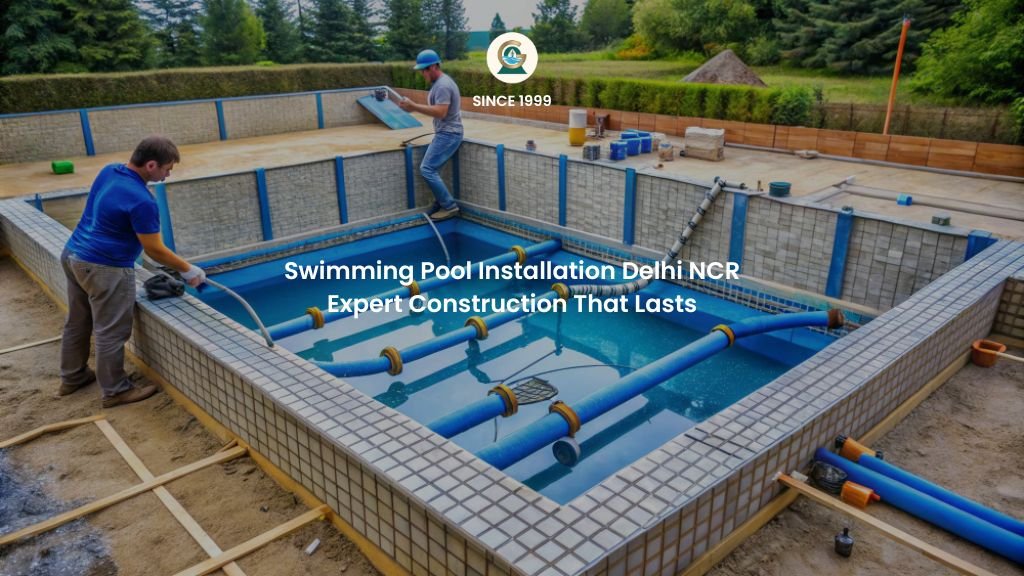
Let me walk you through proper installation, because Instagram time-lapse videos skip about 80% of actual work.
Site assessment and planning: Before digging a single cubic foot of earth, we need understanding what we’re working with. Soil composition matters enormously. Clay soil behaves differently than sandy soil when saturated. Groundwater levels affect everything from drainage to structural design.
There’s a Chhattarpur property where we discovered groundwater table much higher than expected. Changed the entire drainage strategy. If we’d just started digging without proper assessment, that pool would be fighting hydrostatic pressure its entire life.
We also examine access for equipment. Can excavators reach the site? Where does excavated soil go? How close can concrete trucks get? These logistics sound boring, but they determine whether installation proceeds smoothly or becomes nightmarish.
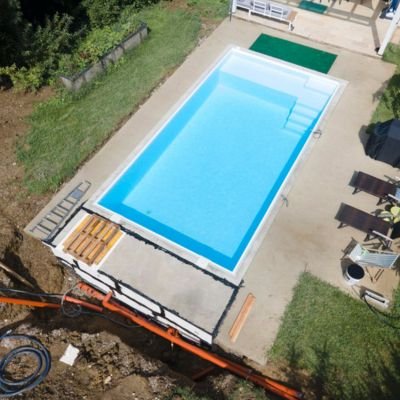
Excavation and base preparation: This is where installation either gets done right or gets done fast. You can’t have both.
Proper excavation means digging to correct depth with proper drainage slopes. It means compacting the base so settlement won’t occur unevenly. It means installing drainage systems preventing hydrostatic pressure from building beneath the pool.
I remember a Greater Kailash installation where previous contractors rushed excavation. Didn’t compact properly. Didn’t install adequate drainage. The pool shell cracked within eighteen months from uneven settlement. We essentially rebuilt it.
Steel reinforcement: For RCC pool construction—which we do—steel reinforcement is critical. This isn’t a slab where corners get cut. The pool shell needs handling water pressure from inside and potential soil pressure from outside.
We use steel mesh on all surfaces, with extra reinforcement at corners and where plumbing penetrates the shell. Steel needs proper spacing from both inner and outer surfaces, which means using proper chairs and spacers, not just laying it down hoping.
For a Vasant Vihar natural swimming pool, the regeneration zone required different reinforcement patterns than the swimming zone. Same project, different structural requirements in different areas.
Plumbing Installation: Getting It Right Before Concrete
This happens before pouring concrete, obviously. Once concrete is poured, changing plumbing becomes exponentially more difficult and expensive.
Main drains, return lines, skimmers, cleaning system plumbing—all this needs correct positioning and installation with proper slope for drainage and circulation. We pressure test all plumbing before concrete pour. Leak discovered before concrete is inconvenient. Leak discovered after concrete is catastrophic.
Concrete pour: Not a “hire some guys with shovels” operation. Pool shell concrete needs pouring in specific sections with proper technique avoiding cold joints that become weak points.
We use concrete with proper water-cement ratio and additives for waterproofing and workability. Mix design matters. Placement technique matters. Curing process really matters.
In Delhi’s climate, curing is particularly critical. Pour concrete in May when it’s 42 degrees, and that concrete can dry too fast, leading to surface cracks and reduced strength. We’ve literally tented over pools and kept them moist for weeks ensuring proper curing.
Swimming Pool Installation Delhi NCR Waterproofing Methods
Multiple layers. First, the concrete itself has waterproofing additives. Second, we apply crystalline waterproofing compounds penetrating into concrete. Third, a cementitious waterproofing layer. Fourth, the final finish layer provides additional water barrier.
This redundancy isn’t paranoia. It’s insurance against the fact that water will find any weakness in your waterproofing and exploit it mercilessly.
Finishing surfaces: For traditional pools, this might be tiles or plaster. For natural pools, we often use exposed aggregate finishes or natural stone.
The finish isn’t just cosmetic. It needs durability, slip-resistance, comfort underfoot, and ability to handle our water quality without deteriorating or staining.
There’s a DLF Phase 5 pool where we used specific river stone in exposed aggregate. Looks beautiful, feels great, and has held up perfectly for seven years despite the owner having questionable water chemistry practices.
Natural Pool Installation: Different Approach Required
Natural swimming pools require rethinking some traditional assumptions.
You’re not building one pool. You’re building two interconnected zones—a swimming area and a regeneration zone where plants and beneficial microorganisms do filtration work.
The regeneration zone needs different depth profiles. Plant selection must work with Delhi’s climate—not everything that grows in European natural pools will thrive here. Water circulation patterns need moving water through the regeneration zone effectively without creating dead spots.
We installed a natural pool in a farmhouse near Gurgaon two years ago. Client was skeptical about whether biological filtration would actually work. Six months later, she was posting photos of dragonflies that had taken up residence in the regeneration zone. Water quality exceeded what her neighbor’s chemical pool achieved.
Realistic Timeline Expectations
I’m giving you honest timelines, not optimistic ones you’ll hear from contractors trying to win bids.
For standard residential pools in Delhi NCR, proper installation takes 3-4 months from excavation to swimming.
For natural swimming pools, add another month for regeneration zone and biological system establishment.
These timelines assume normal weather, no major soil condition surprises, and materials arriving on schedule. Reality often adds a few weeks.
Can it be done faster? Sure. Should it? Not if you want it done right.
That Sainik Farms pool I mentioned at the start? Six months total. Client wasn’t happy about the timeline initially. Now, three years later, she thanks us every maintenance visit because the pool has had zero issues.
Seasonal Considerations for Installation
Best time to start installation here? October.
Weather is perfect for excavation and concrete work. Concrete cures properly without extreme heat or cold affecting the process. You’re likely having the pool ready by March or April, just in time for pool season.
Worst time? Starting in May or June. You’re working through monsoons, extreme heat, and the period when you actually want using the pool.
We do installations year-round because clients don’t always have perfect timing luxury. But if you can control the schedule, autumn is your friend.
Site Challenges Specific to Our Region
Every region has installation challenges. Here are ours:
Soil conditions: Delhi NCR has everything from clay to sandy loam. Sometimes on the same property at different depths. This affects everything from drainage design to structural requirements.
Groundwater: More common than people expect, especially in older Delhi areas and parts of Gurgaon. High groundwater means we need additional drainage systems and sometimes deeper structural base.
Access limitations: Properties in established neighborhoods often have narrow access lanes. Getting heavy equipment in becomes creative problem-solving. I’ve had projects where we had to use smaller excavators because standard ones wouldn’t fit through property entrances.
Dust management: Construction sites generate dust. In Delhi’s already dusty environment, this becomes major consideration, especially for occupied properties. We use water spraying and barriers to manage it, but perfect dust control during excavation is fantasy.
Existing structures: Many installations happen in already developed properties. That means working around existing landscaping, buildings, and utilities. Every shovel of excavation is done with awareness that underground utilities might not be exactly where drawings say they are.
Professional Swimming Pool Installation Delhi NCR Cost Drivers
I won’t quote prices here because every installation is unique. But I can explain what factors significantly affect cost:
Pool size and depth: Obviously. More cubic meters of water means more excavation, more concrete, more everything.
Finish materials: Natural stone costs more than tiles. Exotic imported tiles cost more than standard options. Your finish choice can swing installation costs considerably.
Site complexity: Easy access, simple soil, straightforward installation is one price point. Limited access, difficult soil, complex site conditions is another.
Systems and features: Basic filtration is one thing. Adding heating, automated cleaning systems, elaborate lighting, water features—each addition adds cost.
Natural pool regeneration zones: These require additional square footage, specialized planting, and different construction approaches than simple rectangular pools.
What you’re not paying for: corners cut on structural work, inferior waterproofing, untrained labor. These “savings” cost you much more in repairs down the road.
Common Installation Mistakes We Avoid
I’ve repaired enough pools to know what goes wrong when installation isn’t done properly:
Inadequate drainage under pools: Leads to hydrostatic pressure that can crack shells or push them upward. We install drainage systems beneath every pool.
Poor steel placement: Steel too close to surface rusts. Too far from surface doesn’t provide adequate reinforcement. Proper placement and coverage is non-negotiable.
Rushing concrete curing: Concrete gains strength over time if cured properly. Rush it, and you’re building weakness into structure. We protect and maintain proper moisture levels throughout curing.
Ignoring soil conditions: Building the same way in clay soil as sandy soil is asking for problems. We adjust construction techniques based on actual site conditions.
Inadequate waterproofing: Single-layer waterproofing might work. Until it doesn’t. We use multiple systems because redundancy saves money in the long run.
Long-term Perspective on Quality Installation
Properly installed pools should give you 15-20 years before needing major renovation. You’ll have equipment replacements, routine maintenance, maybe some minor repairs. But the core structure should be solid for decades.
Installation quality determines whether you reach that expectation or not.
I’ve seen pools built in early 2000s still going strong because they were installed properly. And I’ve seen pools built five years ago already having major issues because someone prioritized speed over quality.
If you’re planning pool installation or you’re an architect working on projects including swimming pools, let’s talk before you finalize designs. Twenty-five years of building pools in Delhi NCR means we can help you avoid common mistakes and create something that works beautifully for decades.
Contact GreenEvolutions for expert pool installation consultation.